Canada (English)
 Colombia
 Caribbean and Puerto Rico
 Ecuador
 India
 Indonesia
 Ireland
 Malaysia
 Mexico
 Panama
 Peru
 Philippines
 Singapore
 South Africa
 Sri Lanka
 Thailand
 United Kingdom
 United States

Résumé
Enterprise resource planning systems have evolved dramatically over the past decade, shifting from basic tools used for managing finance and inventory — primarily for small to mid-sized enterprises — to comprehensive platforms supporting end-to-end business operations for companies of all sizes, not just big business. Today’s ERP systems offer deeper insights and improved access to critical information, helping organizations operate more efficiently and adapt to change. As businesses face growing demands from digital disruption, regulatory shifts, and rising customer expectations, modernizing ERP systems is no longer optional — it has become a necessary step to remain effective and competitive.
Practically speaking, a modern ERP system is an absolute requirement for a company to get the most out of its data. Indeed, in today’s business landscape, harnessing and leveraging data has become paramount. Data is no longer just a tool for better decision-making — it’s the foundation for modernizing the whole enterprise. Connected, accessible data enables organizations to automate processes, deploy AI effectively, and adapt to changing market conditions with speed and precision. It powers everything from predictive analytics to supply chain optimization to personalized customer experiences, which is what makes it so essential for driving real business impact. Companies that treat data as a strategic asset gain a clear competitive advantage, while those that don’t risk falling behind.
This report examines why updating business management systems is now mission-critical, which business outcomes are driving ERP modernization, where data fits in, and how organizations can prepare — especially when it comes to data readiness. The paper highlights ERP provider Acumatica and its approach to data readiness for helping businesses unify systems, overcome implementation challenges, and build a foundation for growth.
The Imperative of ERP Modernization
The modernization of ERP systems has shifted from a question of “should I?” to “how do I get started?” — becoming a clear “must-do” for organizations seeking to remain competitive. This is shown clearly by the ERP market’s significant and sustained growth, as businesses need to improve operations, undergo digital transformation, and adopt current technologies such as AI and cloud computing. The ERP market is set for even more growth, projected to expand from $81.15 billion in 2024 to $238.79 billion by 2032, with a CAGR of 14.4%.
ERP is no longer just a back-office function, either; it has become integral to core business operations — and for business competitiveness. ERP innovations in automation, IoT, AI-driven analytics, and other areas are being applied across many industries, fundamentally changing how ERP systems support organizations. Meanwhile, companies that continue to rely on legacy ERP systems or basic accounting software often face similar challenges — inefficiencies, siloed information, limited integration, and a lack of scalability. These issues make it difficult to adapt quickly to changing market conditions and evolving customer expectations.
Modernizing ERP systems addresses several crucial business needs, including improving organizations’ ability to meet customer expectations and enabling business growth without substantial operational disruptions. Modernization drives greater automation and efficiency, reducing costs and minimizing errors. The best ERP systems provide industry-specific modules that address regulatory and compliance requirements. In the bigger picture, a modern ERP infrastructure supports business agility, allowing organizations to adapt swiftly to market changes and maintain a competitive advantage.
Standardization and Documentation of Business Practices
Before modernization can happen, the organization needs to take crucial steps to lay the foundation for success. This includes thinking through the business practices and processes that make up the company’s day-to-day operations — and support its strategic goals. Ideally, any new ERP system adopted should help the company bring structure and visibility to its daily operations by standardizing these workflows and centralizing data. This helps businesses across many different industries reduce errors, improve collaboration, and scale more effectively. Critical target outcomes include:
- Consistent Workflows — Teams follow defined steps for tasks such as purchasing, invoicing, and approvals using automation, templates, and rules.
- Comprehensive Audit Trails — Every transaction is time-stamped, logged by the user, and supplemented by relevant attachments for easy tracking and compliance.
- Controlled Flexibility — Workflows can be customized while maintaining consistency across departments.
- Real-Time, Shared Data — Everyone accesses the same up-to-date information, improving coordination and decision-making.
- Accelerating Onboarding — Guided processes and embedded help tools accelerate training and employee ramp-up.
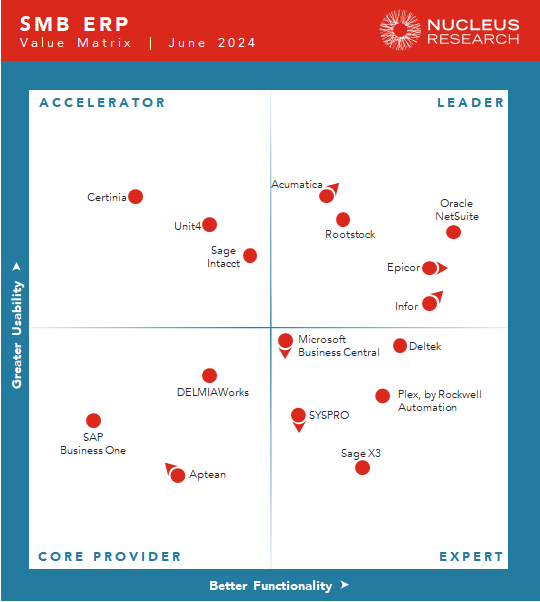
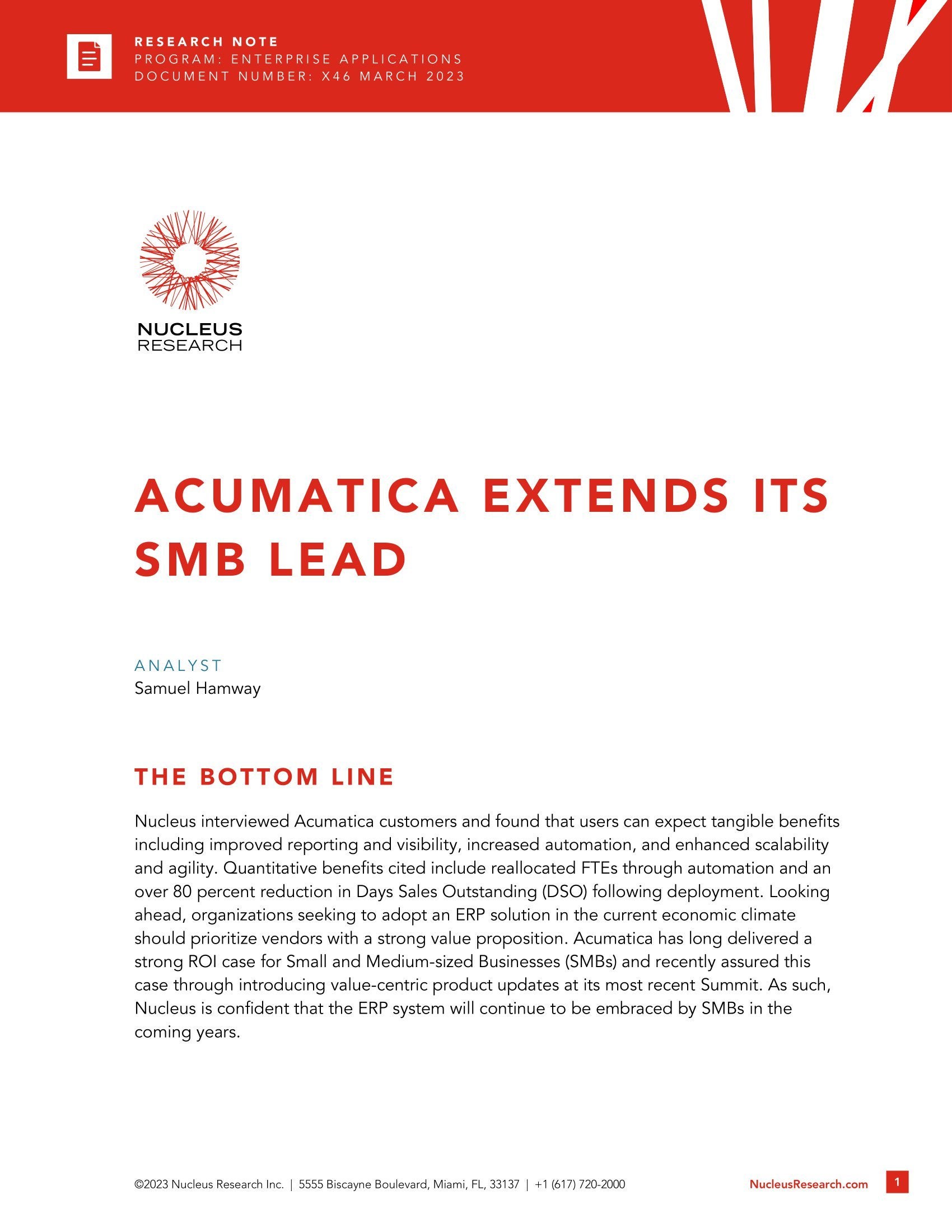
For a key example of these principles in action, consider Acumatica, a cloud ERP company that serves small and mid-sized distribution, manufacturing, construction, retail, and services businesses. It offers a flexible platform with open APIs, allowing organizations to connect industry-specific applications and manage operations from a centralized system. The company also supports both cloud and hybrid deployments, making it adaptable to different IT environments and business needs.
As an illustration of the impacts of standardization and documentation, Keller Supply Company, a major U.S. plumbing and HVAC distributor, turned to Acumatica to enhance operations across 70-plus locations. Prior to implementation, inconsistent order processing and limited inventory visibility created bottlenecks. Acumatica’s Distribution Edition standardized Keller Supply’s workflows, connected sales and inventory data, and enabled real-time updates with document tracking — leading to fewer errors, faster fulfillment, and improved customer satisfaction. It also made training easier and supported expansion into new markets.
Data Readiness for Innovation Adoption
To get the most out of modern systems and technologies, organizations need to start with data that is well-organized, accurate, and ready to support new processes. Data readiness is crucial for modernizing or upgrading ERP systems because it ensures data is accurate, consistent, and structured to support new processes and technologies. Data readiness begins with a comprehensive assessment of current data assets, which includes cataloging sources, evaluating data quality across different sources and functional areas, and identifying issues such as duplicates and inconsistencies. Early data profiling and analysis help flag potential disruptions during migration or integration; being armed with the foresight to avert these disruptions more than pays back the investment in early awareness and candid assessment of any data issues.
Data cleansing then removes duplicates, corrects errors, standardizes formats, and fills in missing values. During this process and others, automation tools help organizations efficiently manage large datasets. Data mapping and transformation steps align legacy data structures with the new ERP system’s requirements while preserving context.
Governance is another critical layer. Defining roles like data owners and data stewards ensures accountability for data quality. Structured frameworks such as DMBOK (Data Management Body of Knowledge) and the DGI (Data Governance Institute) Framework offer guidance for managing data over time, promoting consistent standards and alignment with business functions and needs. These efforts also lead to clear data dictionaries, which help users understand and maintain data consistency.
During a data migration project, validation and reconciliation steps ensure accurate data transfer. Automated tools compare source and target datasets to identify discrepancies, while data monitoring and auditing functions provide oversight and traceability to ensure compliance. Throughout this journey, user engagement is crucial; taking the time to clarify needs, build buy-in, train users, and document processes will prepare users for the new system so they can maintain data standards over the long run — which turns data quality into a critical business driver.
Acumatica’s Data Readiness Approach
When it comes to data readiness, Acumatica supports integrating diverse data types — from structured transactional records to unstructured files such as emails, PDFs, and real-time IoT streams — through its open, AI-ready platform. This flexibility allows businesses to unify critical data sources within a single ERP environment. Acumatica’s architecture is built to handle complex data inputs, enabling more accurate forecasting, real-time analytics, and intelligent automation. This translates into timely insights that improve resource allocation, agility in response to consumer demands, and customer satisfaction. Acumatica helps organizations move beyond basic reporting to enable scenario modeling, anomaly detection, and proactive decision support.
Overcoming ERP Modernization Challenges
ERP modernization carries inherent challenges, including operational disruptions and technical complications. These can be mitigated through structured planning that clearly outlines objectives, timelines, and milestones. Phased deployments — starting in limited or non-critical environments — allow organizations to identify and resolve issues early.
Continuous testing supports early problem detection, helping reduce downtime, limit costly errors, and ensure a smoother system transition.
A thorough process review is equally important because it identifies inefficiencies and guides decisions around standardization versus customization. Standardized processes typically allow faster deployments and easier maintenance, particularly in SaaS environments. Customization, while sometimes necessary for regulatory or business-specific needs, can introduce added cost and complexity. A hybrid model — standardizing core workflows and customizing where differentiation is needed — is often the most effective approach.
Because any ERP system will be managed and updated by human beings with different skills, experiences, and viewpoints, change management plays a critical role in the modernization process. Early stakeholder engagement builds trust, encourages feedback, and ensures alignment with business objectives. Clear communication helps users understand the reasons behind the change and what to expect. Role-based training equips teams with the skills to adopt the system confidently and with minimal disruption.
Legacy challenges like siloed data, outdated systems, and limited integration often create user resistance. Addressing these issues with practical training, real-world examples, and ongoing support helps ease the transition. Strong leadership involvement reinforces that ERP modernization is a strategic business shift, not just a technical upgrade. When managed well, this process reduces disruption, improves ROI, and lays the groundwork for future innovation.
How a Vetted Deployment Methodology Increases the Odds of Success

The unfortunate truth is that many digital transformation projects stall out or never realize the improvements that come when modern technology is implemented well. This pitfall can be avoided with a well-vetted deployment methodology — and Acumatica again offers a prime example of this. The company’s Success Deployment Methodology is a structured, multi-phase approach designed to guide customers through a complete ERP implementation and ensure long-term operational success. It begins with the Plan and Monitor phase, which includes creating a project schedule, organizing communication plans, and conducting a kickoff meeting; these critical activities pay dividends throughout the project. The Discovery phase follows, focusing on assembling the project team, identifying business needs, performing gap analysis, and obtaining customer approval. In the Analyze & Design stage, Acumatica sets up environments, maps business processes, and holds workshops to gather and refine requirements.
Acumatica’s Build phase involves system configuration and data migration, culminating in the setup of the production environment. The Stabilize phase prepares the organization for deployment through end-user training and user acceptance testing (UAT). The Deploy phase is where the system goes live, guided by a cutover plan and final data migration. After deployment, the Post-Go-Live phase provides immediate support.
The final phase in the methodology, Sustain, begins once the project is considered complete and shifts focus to long-term improvement. This includes identifying potential areas of enhancement through system updates and other improvements that can drive better customer satisfaction and realize more benefits. Measurable outcomes — like survey results with user feedback — are used to perform analysis and inform process improvements. These changes are documented and governed using the five “S” principles: Sort, Set in Order, Shine, Standardize, and Sustain. A key element of the Sustain phase is ongoing feedback, which is vital for ensuring continuous alignment with business needs. Feedback is gathered regularly through check-ins or surveys to track progress, prevent recurring issues, and drive ongoing optimization.
The Benefits of Unifying Systems and Data
Consolidating data into a single system helps replace disconnected departmental silos with a clearer and more accurate unified view of the business. When teams like finance, operations, and customer service work with the same reliable, cleansed data, it improves coordination, reduces errors, and supports more efficient processes. This establishes a foundation for a centralized system that can be used for AI, automation, reporting, and future system upgrades.
For example, in manufacturing, production schedules, inventory levels, and procurement data can be integrated in real time. This enables purchasing teams to respond quickly to material shortages and helps production managers adjust workflows based on actual inventory, thereby eliminating the delays that would be caused by data gaps or manual updates. For field service teams, real-time scheduling and dispatch tools can help allocate technicians more efficiently — reducing travel time and costs, as well as improving customer response. In another example, a construction company can integrate its project management and accounting systems, allowing job costing data to flow directly into financial reports without manual re-entry.
In Acumatica’s case, its open API framework also enables straightforward integration with industry-specific tools that companies already have in place, such as Procore for construction, Shopify for e-commerce, or CAD software in manufacturing. In production, field services, warehousing, or similar settings, IoT integration allows for equipment monitoring and predictive maintenance, which can reduce downtime. Blockchain capabilities support secure material tracking and compliance, while features like sustainability tracking and RPA (robotic process automation) help improve resource use and reduce repetitive tasks. All of these integrations reduce the need for redundant data entry and improve accuracy across systems. Acumatica’s flexible platform also supports various pre-integrated ISV (independent software vendor) applications through its Marketplace, covering an array of business needs, including solutions for payroll processing, advanced inventory management, or compliance-tracking tasks.
Beyond the benefits mentioned above, a truly modern ERP solution such as Acumatica helps improve operational efficiency by automating core business functions. This reduces manual effort, limits errors, and allows staff to focus on tasks that require more judgment or expertise. Meanwhile, a cloud-based platform with mobile access allows users to work from anywhere — the shop floor, the field, at home, or on the road. This flexibility helps companies lower their reliance on physical infrastructure and eases the burden on IT teams by reducing the need for frequent system maintenance.
Another key aspect to consider when evaluating a modern ERP system is its security architecture. Essential features include role-based access control, which ensures that system access and data visibility are restricted based on user roles and responsibilities. Multifactor authentication adds a critical layer of security by requiring multiple verification methods when a user logs in. A comprehensive audit trail creates a detailed record of system activities and data modifications, enabling effective monitoring and accountability. The system should also employ data encryption protocols and support industry compliance frameworks. All of these are important security features to look for when shopping for a modern ERP system.
Strengthening Competitive Advantage and Fueling Future Growth
Modernizing ERP systems or upgrading an accounting solution is a practical — and necessary — long-term investment for companies looking to improve operations, stay competitive, and facilitate lasting growth. A fully modern ERP solution like Acumatica supports emerging technologies and the accurate, well-structured data that is an absolute requirement for achieving meaningful results. It must also include scalability, an especially important consideration for businesses expanding into new markets or growing their product lines. This is one key reason that so many companies are adopting cloud-based ERP systems like Acumatica’s: these systems eliminate the need for significant infrastructure changes as the company scales.
The cost of delaying ERP modernization grows over time. Fragmented data, higher support costs, and increased exposure to compliance and cybersecurity risks — among other pitfalls of legacy ERP systems — slow operations and make it harder for businesses to respond to changing market conditions. As Acumatica emphasizes, the cost of doing nothing is rarely neutral; it often means falling behind. Companies that delay modernization risk being overtaken by more agile competitors that are better equipped to innovate and scale. With a clear plan and the right vendor, by contrast, ERP modernization becomes a manageable transition supporting better system performance, improved coordination across business functions, and future scalability for the business as a whole.
Important Information About This Paper
Contributeur
Robert Kramer, Vice President & Principal Analyst, Enterprise Data, ERP, SCM
Publisher
Patrick Moorhead, CEO, Founder and Chief Analyst at Moor Insights & Strategy
Inquiries
Contact us if you would like to discuss this report, and Moor Insights & Strategy will respond promptly.
Citations
This paper can be cited by accredited press and analysts but must be cited in-context, displaying author’s name, author’s title, and “Moor Insights & Strategy.” Non-press and non-analysts must receive prior written permission by Moor Insights & Strategy for any citations.
Licence
This document, including any supporting materials, is owned by Moor Insights & Strategy. This publication may not be reproduced, distributed, or shared in any form without Moor Insights & Strategy’s prior written permission.
Disclosures
Acumatica commissioned this paper. Moor Insights & Strategy provides research, analysis, advising, and consulting to many high-tech companies mentioned in this paper. No employees at the firm hold any equity positions with any companies cited in this document.
Clause de non-responsabilité
The information presented in this document is for informational purposes only and may contain technical inaccuracies, omissions, and typographical errors. Moor Insights & Strategy disclaims all warranties as to the accuracy, completeness, or adequacy of such information and shall have no liability for errors, omissions, or inadequacies in such information. This document consists of the opinions of Moor Insights & Strategy and should not be construed as statements of fact. The opinions expressed herein are subject to change without notice.
Moor Insights & Strategy provides forecasts and forward-looking statements as directional indicators and not as precise predictions of future events. While our forecasts and forward-looking statements represent our current judgment on what the future holds, they are subject to risks and uncertainties that could cause actual results to differ materially. You are cautioned not to place undue reliance on these forecasts and forward-looking statements, which reflect our opinions only as of the date of publication for this document. Please keep in mind that we are not obligating ourselves to revise or publicly release the results of any revision to these forecasts and forward-looking statements in light of new information or future events.
© 2025 Moor Insights & Strategy. Company and product names are used for informational purposes only and may be trademarks of their respective owners.